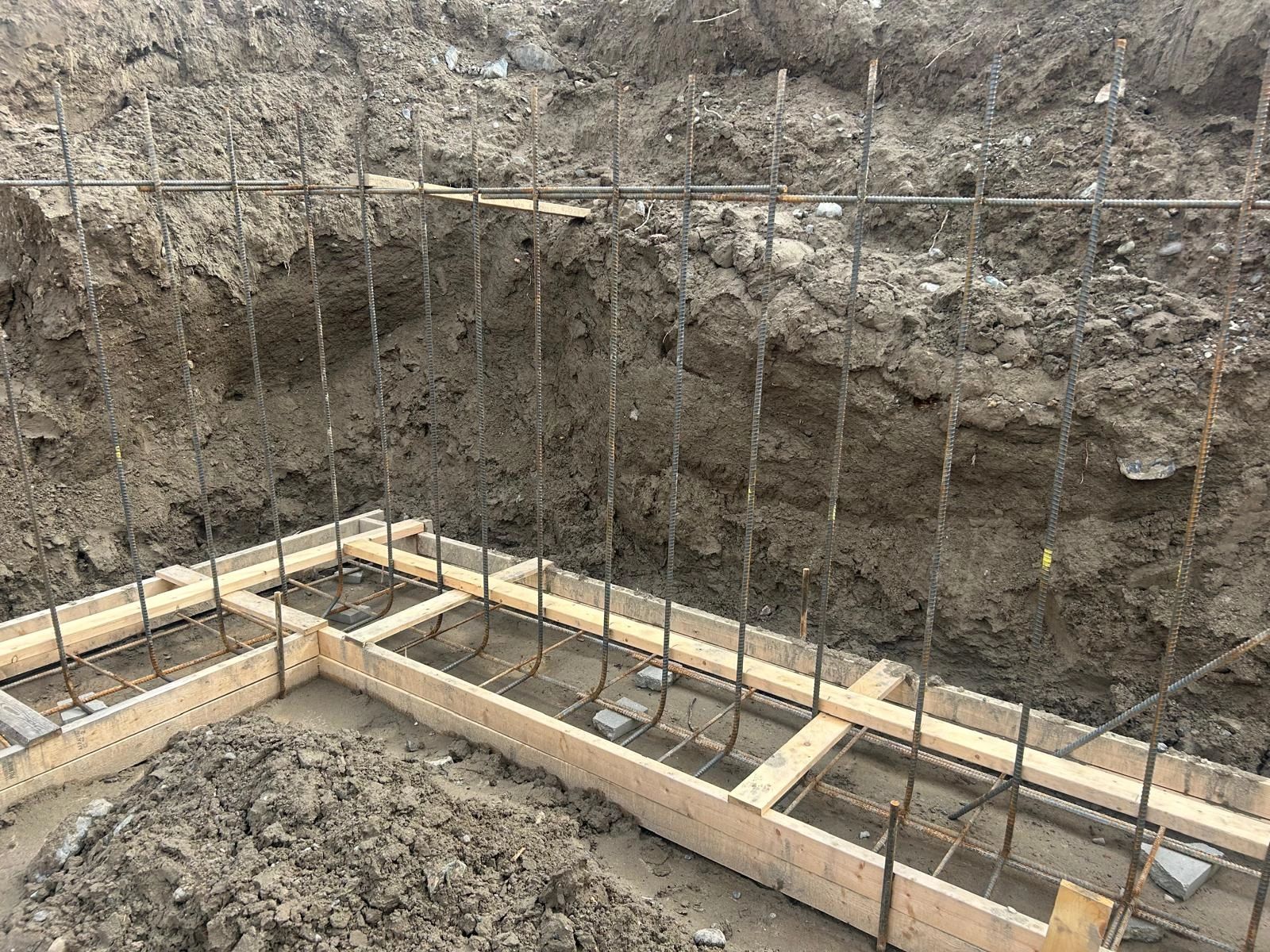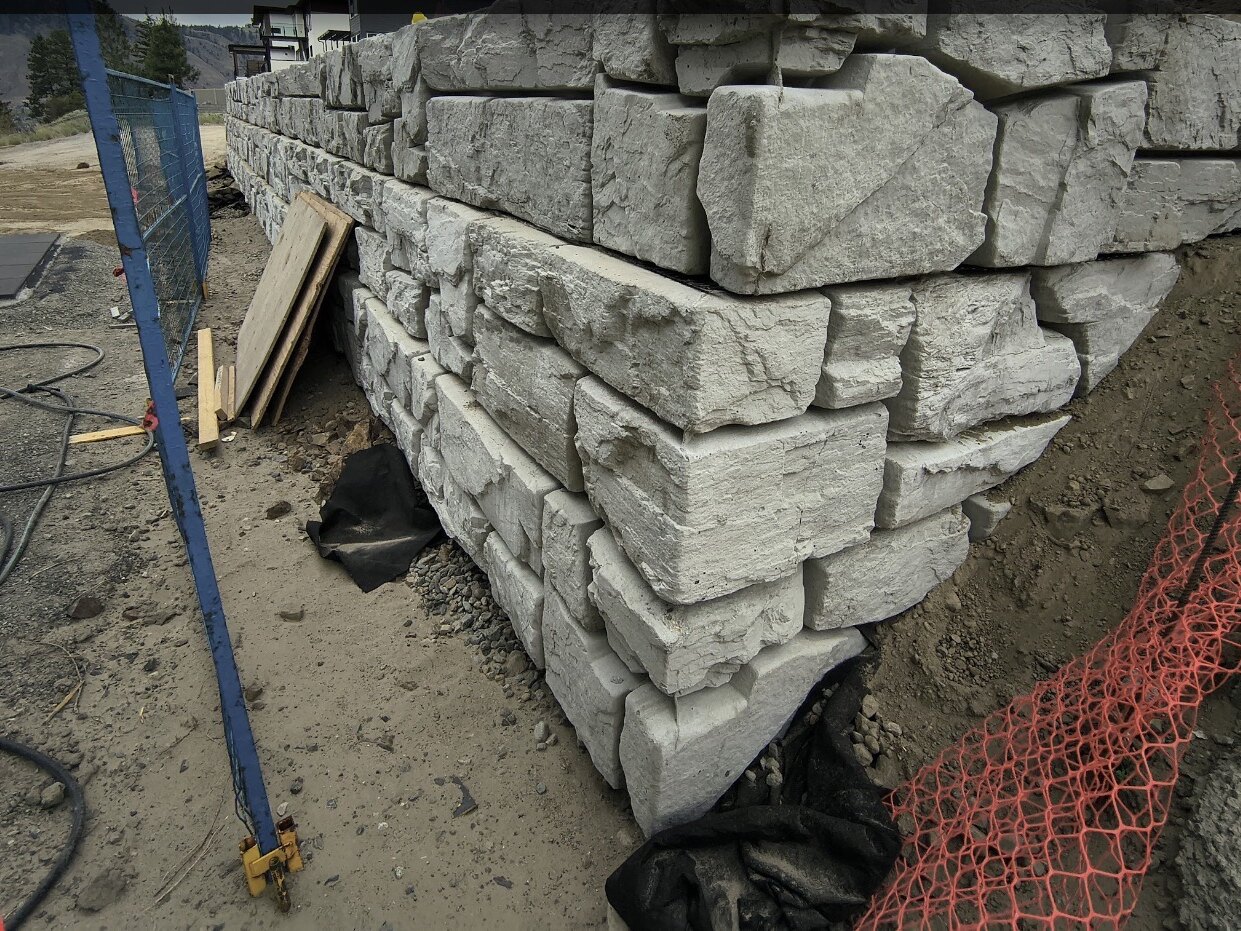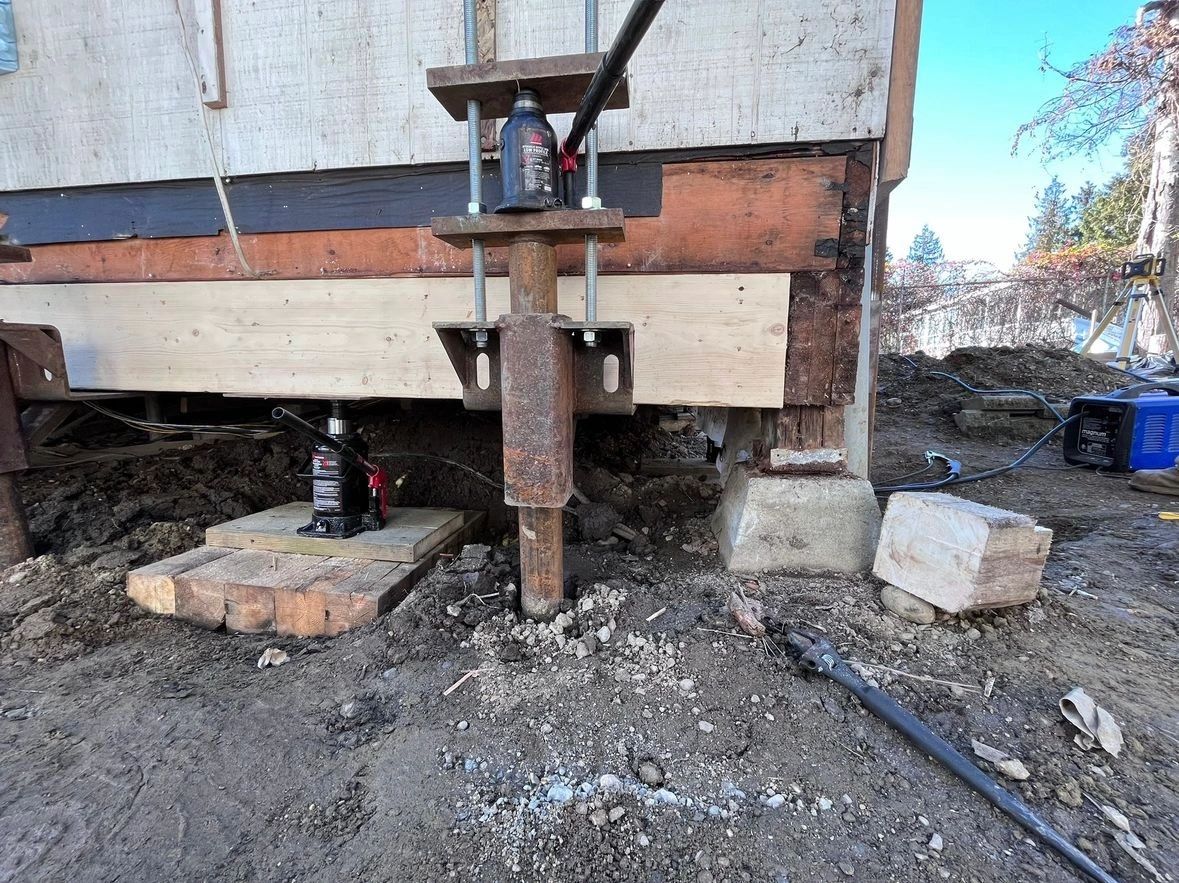
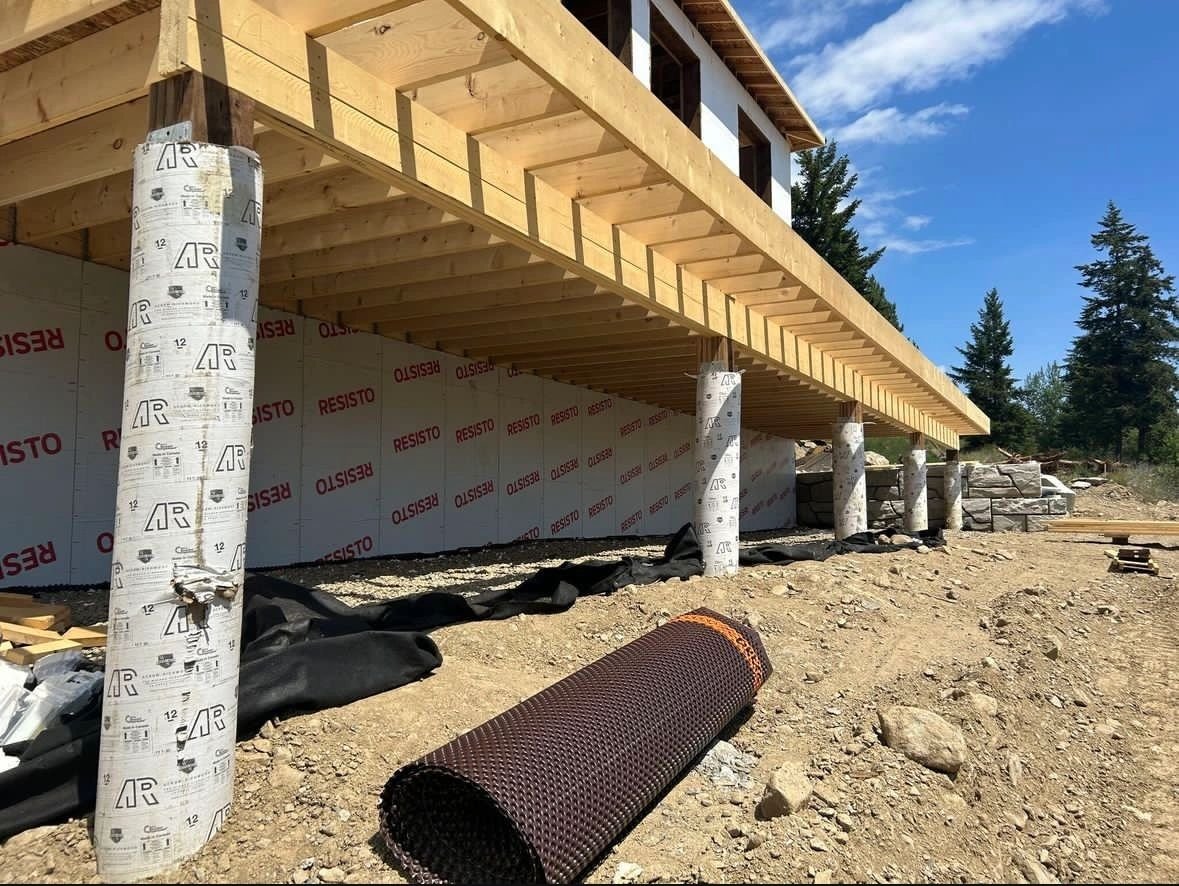
Most foundation problems trace back to one thing: water. And on BC’s coast — across Metro Vancouver and the Fraser Valley — fall and winter are when water does the most damage. As the rains return, water that isn’t carried away from your home soaks into the soil against the foundation, raises the pressure on basement and crawl-space walls, and works its way into every crack it can find. The reassuring part is that much of it is preventable — and the fixes range from a Saturday of gutter work to an engineered drainage solution. Here is how water damages a foundation, how to spot it, and what to do before winter sets in.
How does water actually damage a foundation?
Water rarely attacks the concrete directly. It works through the soil — which is why lasting protection starts with the soil and the drainage around your home, not with sealing the walls alone. A few mechanisms do most of the harm:
- Hydrostatic pressure. When the soil around your foundation is saturated, the water in it pushes against the foundation walls and floor. Given a crack or a cold joint, that pressure drives water inside; given enough of it, it can bow a wall.
- Swelling and shrinking soils. Moisture-sensitive clays and silts, common across BC, expand when they take on water and shrink when they dry. That seasonal movement lifts and drops different parts of a foundation unevenly, and uneven movement is what cracks concrete and framing.
- Softening and settlement. Saturated soil loses strength. Ground that carried the house comfortably in summer can soften under load in a wet fall, letting the foundation settle — sometimes unevenly.
- Freeze–thaw. When wet ground freezes, frost-susceptible soils such as silts can draw in more water and form layers of ice that lift the ground — frost heave. Footings built below the frost line are largely protected, so heave shows up mostly in shallower elements like slabs, steps, and walkways. Water that freezes inside existing cracks also widens them a little with every cold snap.
- Erosion. Concentrated runoff — a downspout emptying at the wall, for instance — can wash out the very soil that supports the footing.
What are the signs water is affecting your foundation?
Water problems usually show themselves inside and out before they become serious. Watch for:
- A damp or wet basement or crawl space, especially after heavy rain, or a persistent musty smell.
- Efflorescence — the chalky white mineral staining left on concrete where water has passed through.
- Water pooling against the foundation, or soggy low spots in the yard near the house, after it rains.
- New or widening cracks, or cracks that weep during a storm.
- Doors and windows that start to stick, or floors that feel less level than they did.
One damp corner after an exceptional storm may be nothing. The same spot every time it rains — or any of these signs getting worse — is worth a closer look before the heaviest rains of late fall and winter arrive.
Where is the water coming from?
Most foundation water problems start with water that should have been carried away and wasn’t. The usual sources:
- Gutters and downspouts. Clogged gutters overflow against the wall, and downspouts that dump right at the foundation deliver roof water exactly where you don’t want it.
- Grading that slopes toward the house. If the ground falls back toward the foundation, every rain runs to the wall instead of away from it.
- Old or failing perimeter drainage. Many older homes in Metro Vancouver and the Fraser Valley rely on perimeter drainage (weeping tile) that has since silted up, collapsed, or filled with roots — so the system that used to relieve water pressure no longer does.
- A high water table. In low-lying areas — including much of the Fraser River floodplain, from Richmond and Delta up through the Fraser Valley — groundwater itself can sit high enough to keep the soil around a foundation saturated through the wet months. (Our post on underpinning a home in Richmond shows what saturated ground can mean for a foundation.)
How do you protect your foundation before winter?
Some of the most effective steps cost little more than an afternoon. Start with the water you can redirect:
- Clean the gutters and extend the downspouts. Aim to discharge roof water at least 1.8–3 metres (6–10 feet) from the foundation, not at its base.
- Fix the grading. The ground should slope away from the house — a common guideline is a slope of about 5%, or roughly 8 cm over the first 1.5 metres (3 inches over 5 feet), though your municipality may set its own requirement. Fill low spots that let water pool against the wall.
- Keep window wells and drains clear so they don’t fill and feed water straight to the foundation.
When the simple steps aren’t enough — because the perimeter drainage has failed, the water table is high, or the site sheds water toward the house — the fix becomes an engineered one: restoring drainage, relieving water pressure in the soil, and grading the site so water is managed on purpose. That is where a professional assessment earns its keep, because the right solution depends on what the soil and the site are actually doing. (On a sloped lot, the same water also loads retaining walls and the slope itself — our post on protecting hillside properties before the wet season covers that side.)
When has water become a structural problem?
Drainage is prevention. Once water has already moved a foundation, you are past prevention and into repair. The signs that it has crossed that line are the ones that don’t come and go with the weather: cracks that keep widening, floors that are progressively less level, a wall that is bowing, doors that get harder to close each season.
At that point the question is no longer “where is the water,” but “how far has the foundation moved, and what will stabilize it.” That starts with a geotechnical assessment to establish the soil conditions and the cause, and often leads to underpinning — transferring the load to stable ground with helical piles or micropiles. Our guide to foundation repair in BC walks through how that works, and our post on reading foundation cracks covers how to tell a cosmetic crack from a structural one.
Get ahead of the rain
The best time to deal with water is before the worst of it arrives. A dry day between fall storms is the ideal moment to walk your gutters, downspouts, and grading, clear your drainage, and note anything that looks off — while there is still time to fix it before the heaviest rains load the soil up.
If your foundation is already showing signs of movement, an assessment will tell you exactly what you are dealing with. BC Foundations combines geotechnical and structural engineering to diagnose and solve water-driven foundation problems across the Fraser Valley, Metro Vancouver, and beyond. Contact us today to arrange an assessment before winter.
Frequently asked questions
Is water in a crawl space after heavy rain normal?
No — even if it is common, it is not something to accept. Occasional dampness after an extreme storm can happen, but water that appears every time it rains points to a drainage or grading problem that will keep working on your foundation until it is addressed.
Why does my basement only leak when it rains?
Rain saturates the soil around the foundation and raises the water pressure against the walls and floor, which pushes water through cracks and joints that stay dry the rest of the time. The leak is a symptom; the cause is usually water that isn’t being drained away from the house.
How far away from the foundation should downspouts drain?
A good rule of thumb is to discharge roof water at least 1.8–3 metres (6–10 feet) from the foundation, onto ground that slopes away from the house — not at the base of the wall where it soaks straight down against the footing.
Can drainage problems really cause foundation settlement?
Yes. Water weakens and moves soil — softening it under load, swelling and shrinking clays, and eroding support — and that soil movement is what settles and cracks a foundation. It is why durable foundation repair starts by understanding the soil and the water, not just sealing the crack.