Foundation repair addresses a foundation that is settling, cracking, or moving because the soil beneath it can no longer support it reliably. In British Columbia — where the ground ranges from moisture-sensitive Interior silts and clays to soft coastal soils — the right fix is an engineered one: a professional assessment identifies the cause, and a solution such as underpinning with helical piles or micropiles transfers the building’s weight down to stable ground.
If you have noticed cracks, sticking doors, or uneven floors and you are wondering what happens next, here is a plain-language guide to the warning signs, the main repair methods, and what the process actually looks like.
What is foundation repair, and when do you need it?
A foundation can lose support for many reasons — soils that shrink and swell with the seasons, poor drainage, loose or saturated ground, or fill that was never properly compacted. When that happens, the structure moves, and the movement shows up where you live:
- Cracks in foundation walls, drywall, or exterior brick and stucco.
- Doors and windows that stick or no longer close squarely.
- Sloping, bouncing, or uneven floors.
- Gaps opening where walls meet floors, ceilings, or trim.
- A foundation wall that is bowing, leaning, or visibly out of plumb.
A single hairline crack is rarely urgent, but several of these signs together — or any that are getting worse over time — point to active movement worth investigating. (Our post on summer foundation cracks in the Interior covers how to tell a cosmetic crack from a structural one in more detail.)
Why do foundations fail in British Columbia?
BC does not have one kind of ground — it has many, and each fails differently. That is why a repair that works on one property can be wrong for the one next door.
- In the Interior and the Okanagan, moisture-sensitive silts and clays shrink in dry summers and swell when wet, moving foundations up and down with the seasons.
- Along the coast and Lower Mainland, soft, saturated soils and a high water table can compress under load, and loose sands can lose strength in an earthquake.
- Across the province, poor drainage, uncompacted fill, and slope movement undermine foundations that were otherwise sound.
Because the cause is in the ground, lasting foundation repair starts underground — by understanding the soil, not just patching the crack you can see.
How is a foundation problem diagnosed?
Good foundation repair begins with a diagnosis, not a quote. A geotechnical assessment establishes what the soil is doing and why the foundation is moving: the soil profile, the depth to a stable bearing layer, groundwater, and whether the movement is active or has stabilized.
Only once the cause is understood can a professional engineer design a fix that actually solves it. Skipping this step is how homeowners end up paying twice — for a repair that treats the symptom while the real problem keeps working underneath.
What are the main foundation repair methods?
There is no single “foundation repair” — there is a toolkit, matched to the soil and the structure. The most common engineered methods in BC include:
Underpinning
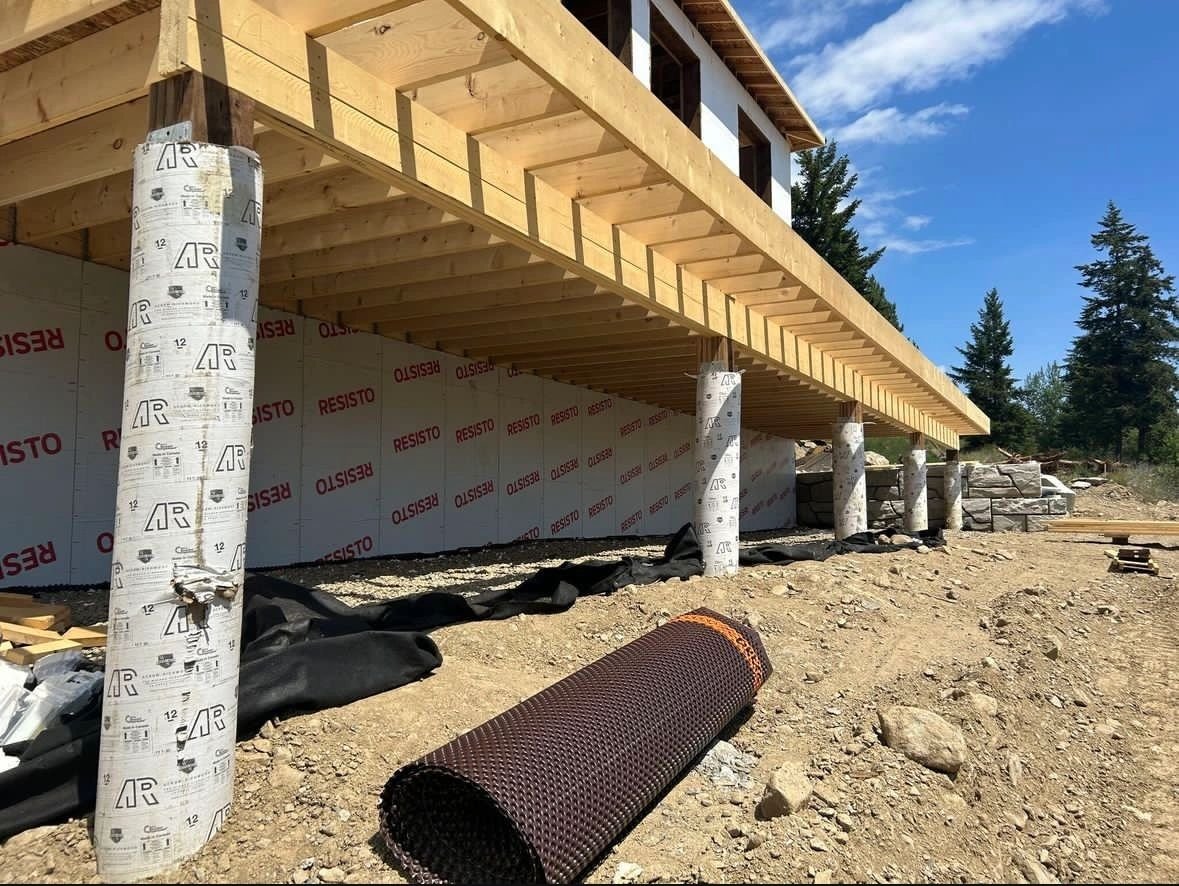
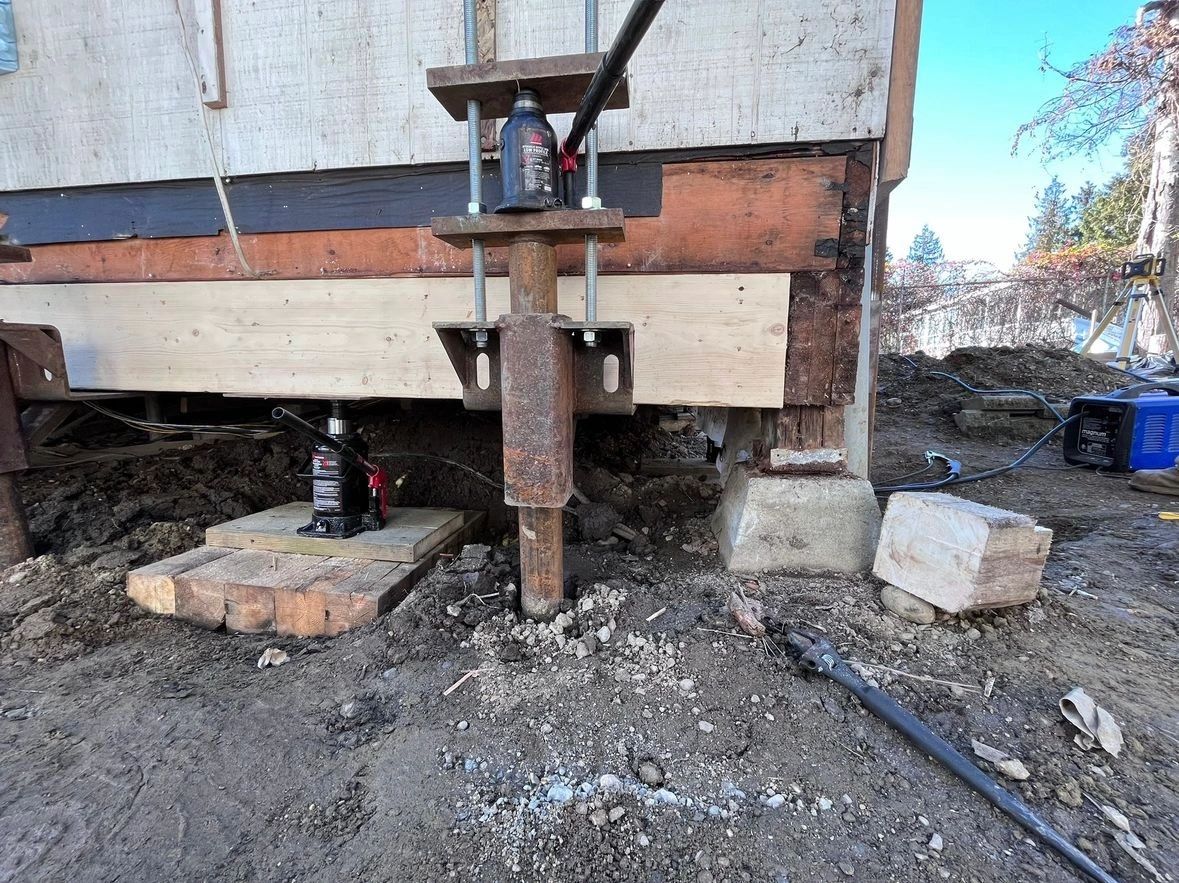
Underpinning strengthens and stabilizes an existing foundation by extending its support down to soil or rock that can reliably carry the load. It is the general approach behind most settlement repairs, and it is usually carried out with piles.
Helical piles
Helical piles are steel shafts with helical plates that are turned into the ground with hydraulic equipment and connected to the foundation with brackets. They reach through weak upper soils to a stronger layer below, can often be installed with compact equipment and little disruption, and their installation torque can be correlated to load capacity — giving the engineer a real-time check on the support each pile is achieving.
Micropiles
Where soils are especially deep or difficult, micropiles are drilled and can be socketed into dense soil or rock, carrying high loads even in tight-access or low-headroom sites.
Retaining walls and slope stabilization
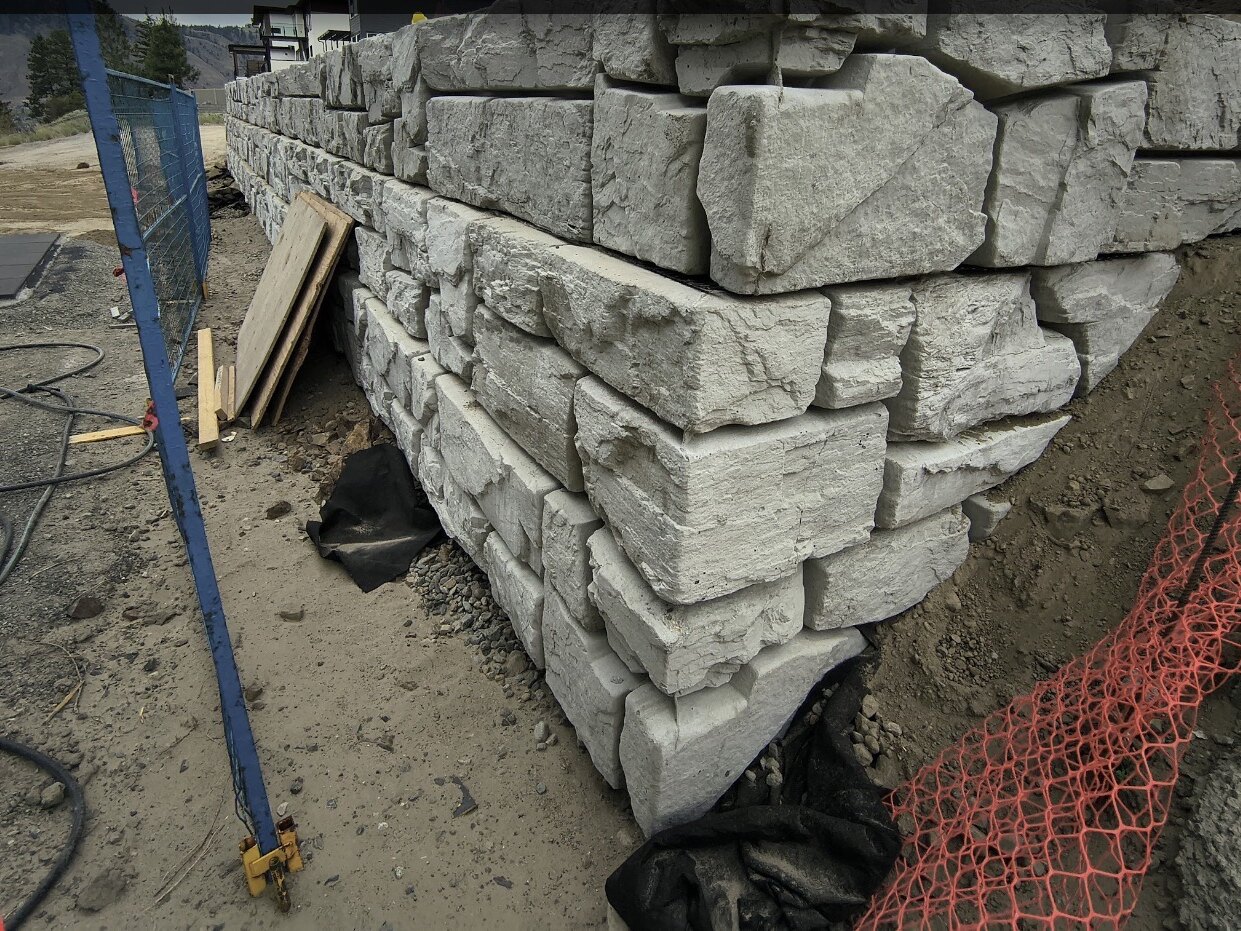
When the problem is a moving slope or a failing wall rather than the building itself, engineered retaining walls and slope stabilization address the ground around and below the structure. (More on this in our post on protecting hillside properties before the wet season.)
Drainage
Because water is behind so many foundation problems, managing it — moving it away from the foundation and relieving pressure in the soil — is often part of a durable repair rather than an afterthought. (Our post on how fall rain and poor drainage damage foundations covers the warning signs and how to protect a foundation before winter.)
What does the repair process look like?
For most homeowners, the unknown is not the pile — it is the process. A typical engineered foundation repair runs in clear stages:
- Assessment. A site visit and geotechnical review establish the cause and the soil conditions.
- Engineered design. A professional engineer designs the solution and produces sealed drawings — the documents your municipality will want for a permit.
- Installation. The crew installs the piles or system to the design, with the work monitored as it goes (for helical piles, that includes tracking installation torque against the design target).
- Verification and field review. The engineer confirms the work was built to the design, so you finish with a foundation that is documented, permitted, and signed off — not just patched.
Why an engineered approach matters
Foundation repair is not a cosmetic trade. The load of your home has to be carried safely into the ground, and getting that wrong is expensive and unsafe. An engineered approach — a professional engineer diagnosing the cause, designing the fix, sealing the drawings, and reviewing the finished work — is what turns a repair into a lasting, documented solution. It also gives you what you need at permit time and if you ever sell the home.
At BC Foundations, our team combines geotechnical and structural engineering with in-house installation, so the same people who diagnose the problem design and stand behind the fix. If your foundation is showing signs of movement, contact us today to arrange an assessment.
Frequently asked questions
How do I know if my foundation needs repair?
Watch for cracks that are widening, doors and windows that have started to stick, sloping or uneven floors, and walls that are bowing or leaning. One minor crack is rarely urgent; several signs together, or any that are getting worse, are worth a professional assessment.
Can foundation problems be fixed for good?
When the repair is engineered to address the actual cause — transferring the load to stable ground and managing the water or soil conditions behind the movement — it is a long-term solution, not a temporary patch. The key is diagnosing the cause first, which is why the assessment matters.
Do I need an engineer for foundation repair?
For anything structural, yes. A professional engineer identifies the cause, designs a fix suited to your soil, and provides the sealed drawings and field review your municipality and your peace of mind require.
How much does foundation repair cost?
It depends on the cause, the depth to stable soil, how many piles are needed, and site access, so there is no single figure. Every project starts with an assessment that identifies the problem and scopes the work.